Best alternatives to GPTHuman AI in 2025
1. Why “AI Humanizers” Are Becoming Essential
As generative AI tools—like ChatGPT, Gemini, and Claude—are now deeply embedded in classrooms, workplaces, and publishing industries, the line between human and AI writing is blurrier than ever. Yet, this convenience comes with scrutiny: academic institutions and employers are increasingly checking for “AI traces” in submitted work.
The Shift Toward AI Transparency
In 2024–2025, universities and professional organizations began to enforce clearer AI disclosure rules. For example:
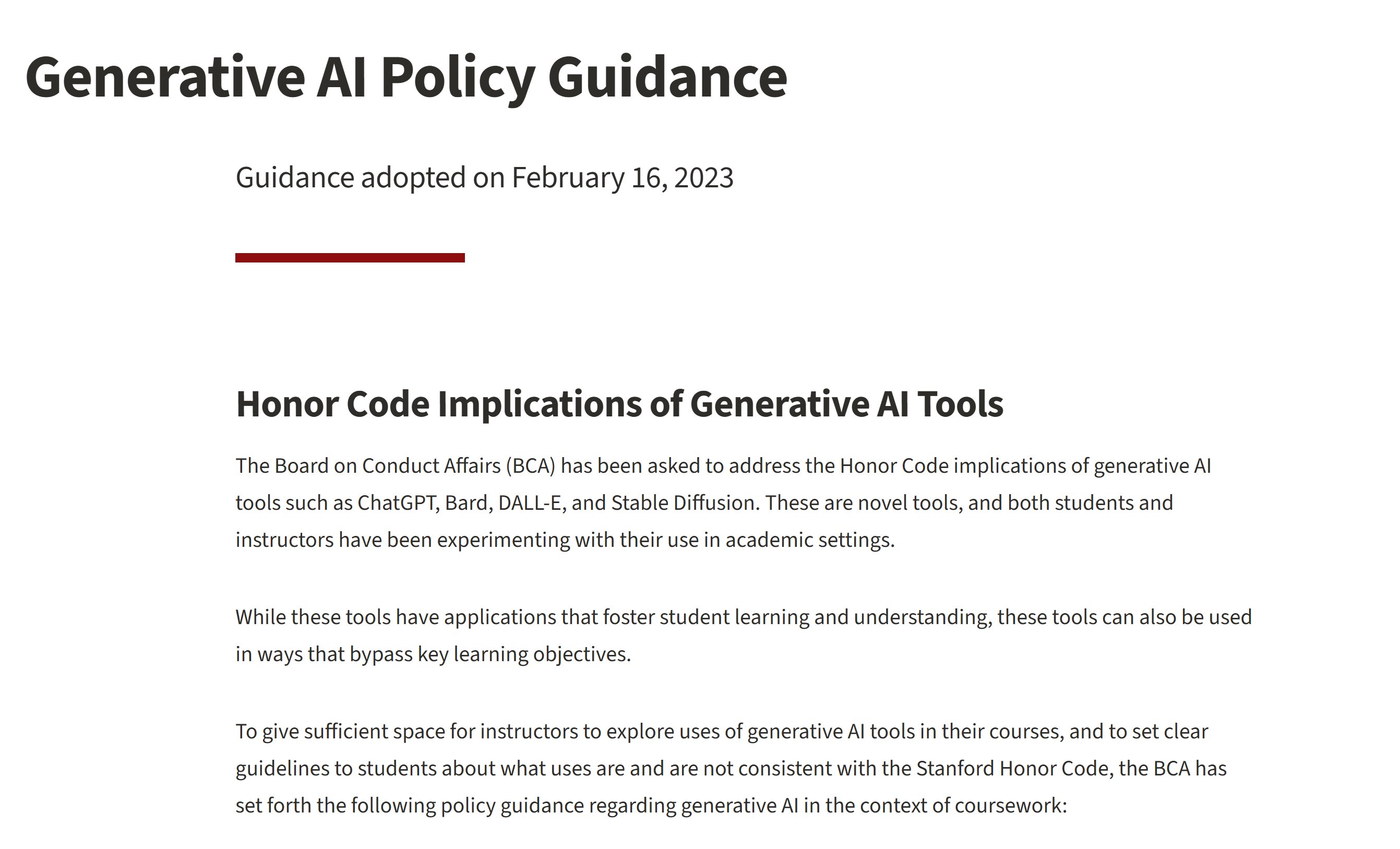
- Stanford University now requires students to acknowledge AI assistance, warning that undisclosed use may count as misconduct. (Stanford Office of Community Standards)
Meanwhile, tools like Turnitin and GPTZero have been integrated into most learning management systems. Yet even Turnitin admits:
“Our AI indicator is a guide, not a verdict. Human review remains essential.”
This means even honest writers using AI ethically risk false positives. A 2024 internal report noted that Turnitin’s false-positive rate can reach 4–5%, especially for ESL (English as a Second Language) students whose sentence structures resemble AI patterns.
The Rise of “AI Humanizers”
To bridge this gap, “AI humanizers” emerged — rewriting tools that refine AI text into more organic, human-like prose. These tools are now used by students, marketers, and professionals who value authenticity and natural tone without losing clarity.
2. Diving into GPTHuman AI Humanizer
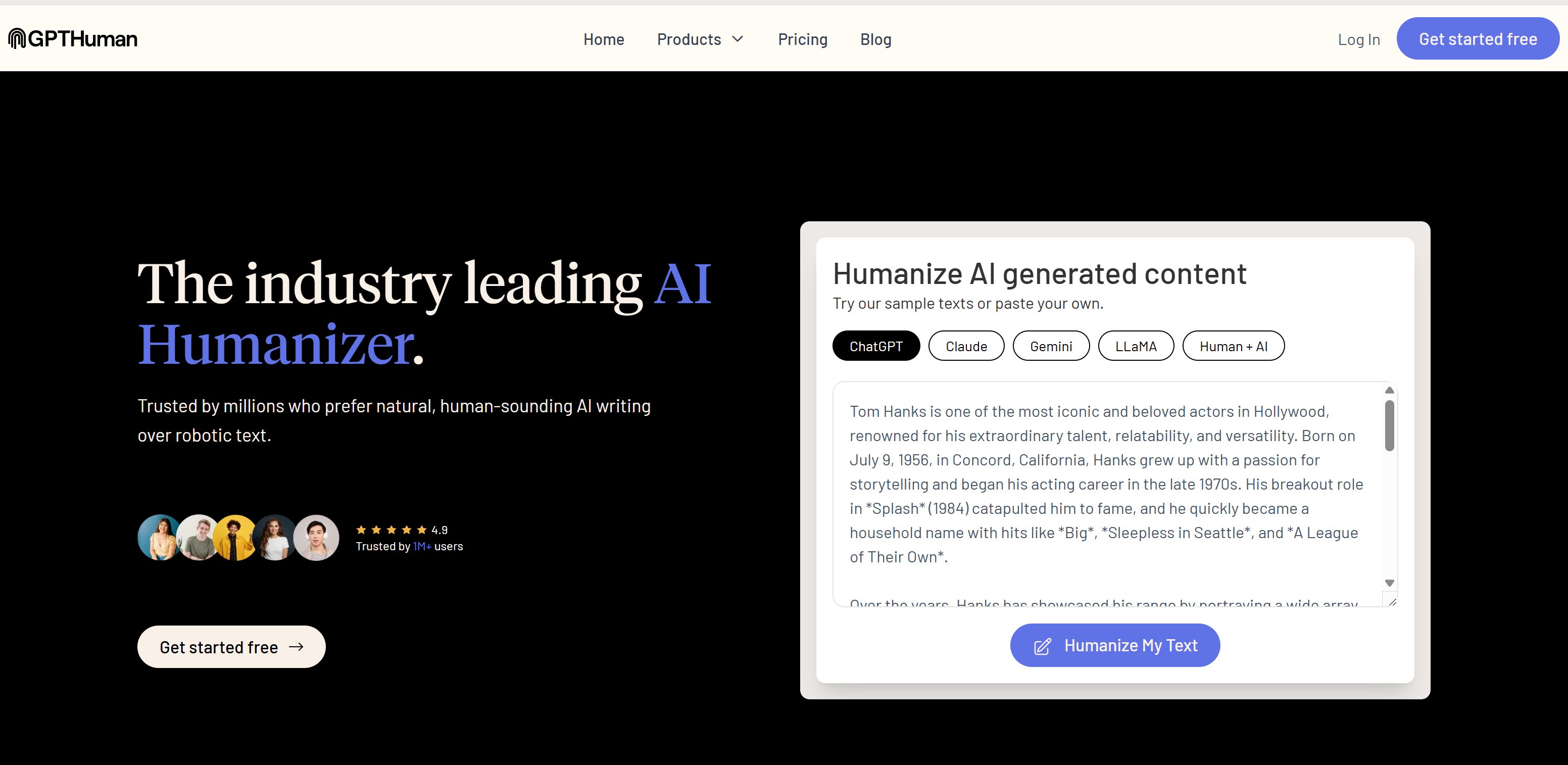
GPTHuman entered the market as a fast, minimalistic rewriting tool designed to “de-AI” your text in seconds. It appealed to beginners with its clean interface and single-click workflow:
Paste → Humanize → Copy.
Its algorithm mainly focuses on lexical substitution (changing synonyms) and sentence restructuring (minor reordering). Users can pick from tone options such as academic, casual, or neutral, though these modes often produce only subtle differences.
✅ Strengths
- Fast and intuitive — no setup, no learning curve
- Web-based and lightweight
- Works well for short, informal content
- Offers a few tonal adjustments
❌ Limitations
1. Surface-Level Editing
It changes words but not the deeper rhythm of writing, leaving text patterns that detectors like Turnitin or GPTZero still recognize.
2. Tone Gaps
Sentences may sound “nearly human” but still carry mechanical phrasing.
3. Meaning Drift
Word substitutions can distort academic nuance or logical flow.
4. No Detection Metrics
Unlike newer competitors, GPTHuman provides no feedback on which parts may trigger AI detection.
In short, while GPTHuman is a convenient entry-level option, it lacks the analytical precision required in professional or academic environments.
3. Top Alternatives to GPTHuman AI in 2025
1. Undetectable.ai
🔗 undetectable.ai
A top choice for creators who want “undetectable” yet natural text. It provides real-time scoring feedback and allows control over the degree of humanization.
Pros:
- Real-time AI detection preview
- Adjustable rewriting depth
- Suitable for SEO, blogs, and social content.
Cons:
- Grammar may slip into longer texts
- Less accurate in academic or technical writing
2. Ace Essay
🔗 aceessay.ai
Ace Essay redefines the category by merging AI detection and text polishing in one integrated workflow. Instead of rewriting blindly, it first scans your text, highlights AI-like areas, and then refines them intelligently.
Pros:
- A very high bypass rate against Turnitin, GPTZero, and ZeroGPT
- Maintains logical structure and academic tone
- Provides an official AI report to verify the humanization result.
Cons:
- Currently supports only English text
3. EssayDone Humanizer
🔗essaydone.ai
EssayDone Humanizer specializes in long-form rewriting and bulk text processing. It’s ideal for users who need to “humanize” large volumes of AI-generated content such as essays, blogs, or full website drafts.
Pros:
- Great for large projects or multi-article rewriting
- Offers several output versions for comparison
- Clean and intuitive interface
Cons:
- Over-humanization can slightly alter meaning
- No real-time AI-score feedback
So, Which AI Humanizer Should You Choose? Here’s a quick comparison to help you choose the best AI humanizer for your specific writing goals.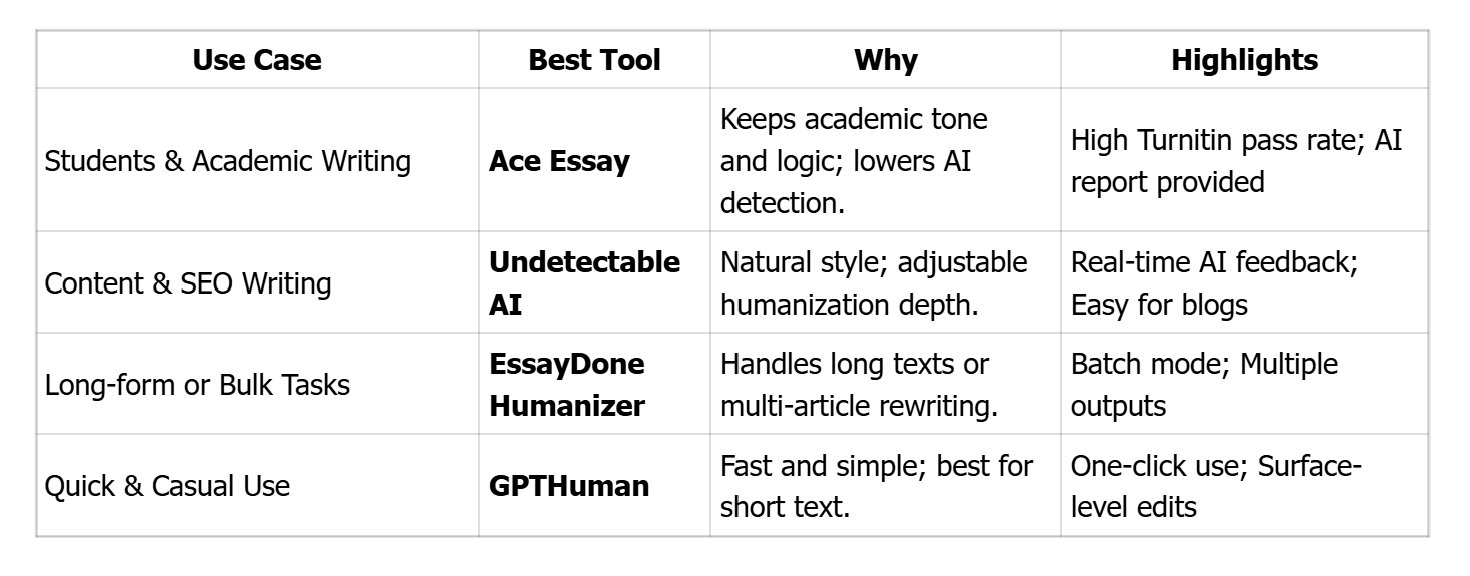
4. Responsible Use and Future Outlook
AI humanizers are powerful tools—but how they’re used makes all the difference. When used ethically, they can help writers refine AI-generated drafts into more natural, personal writing. Instead of hiding AI usage, these tools can serve as learning aids to improve style, sentence flow, and tone.
Studies have shown that many universities now prefer a “use with transparency” approach rather than strict bans on AI tools. This shift suggests a growing acceptance that AI-assisted writing, when properly guided by human judgment, can enhance authentic creativity.
In the future, we can expect humanizers to become more integrated with AI detection systems, offering live feedback on style, structure, and readability. The goal is not to “trick” detectors, but to help writers produce text that feels genuinely human in both expression and thought.
5. Conclusion
GPTHuman entered the market as a simple, fast way to make AI text sound more human. While it remains a convenient option for quick edits, newer tools like Ace Essay, Undetectable.ai, and EssayDone Humanizer deliver deeper, more reliable results.
Each tool serves a different purpose. The right choice depends on your writing goals.
Most importantly, the best AI humanizer is not the one that hides your AI use, but the one that helps you sound like your truest self.
About the Author
Claire Dawson is a dynamic content strategist at AceEssay, blending creativity with data-driven insights to craft compelling narratives and optimize SEO strategies. With a solid background in Marketing and Digital Media, Claire thrives on helping brands, especially in the academic space, grow their digital presence.Outside of her work, Claire is an avid traveler and a hobbyist photographer. At the same time, she loves making friends with people of different backgrounds.